Fire safety · 15 MINUTE CPD
Intumescent Coatings: More Than a Painted Finish
Understand member-specific coating schedules, thickness evidence, compatible layers and repair records for structural steel fire protection.


Your 15-minute plan: spend 10 minutes reading and examining the three teaching graphics, 3 minutes on the site scenario and knowledge checks, and 2 minutes on reflection.
Scope: UK construction inspection principles. Regulatory references to building control and HRB change control concern England; apply the rules and project requirements for the relevant jurisdiction.
1. Colour does not tell you the protection
An intumescent coating reacts to heat to form an insulating char that helps protect the steel. It is a designed fire-protection system, not simply decorative paint. A uniform white finish cannot establish a fire-resistance period. The required protection depends on the structural fire design and the particular member and product. Source 1
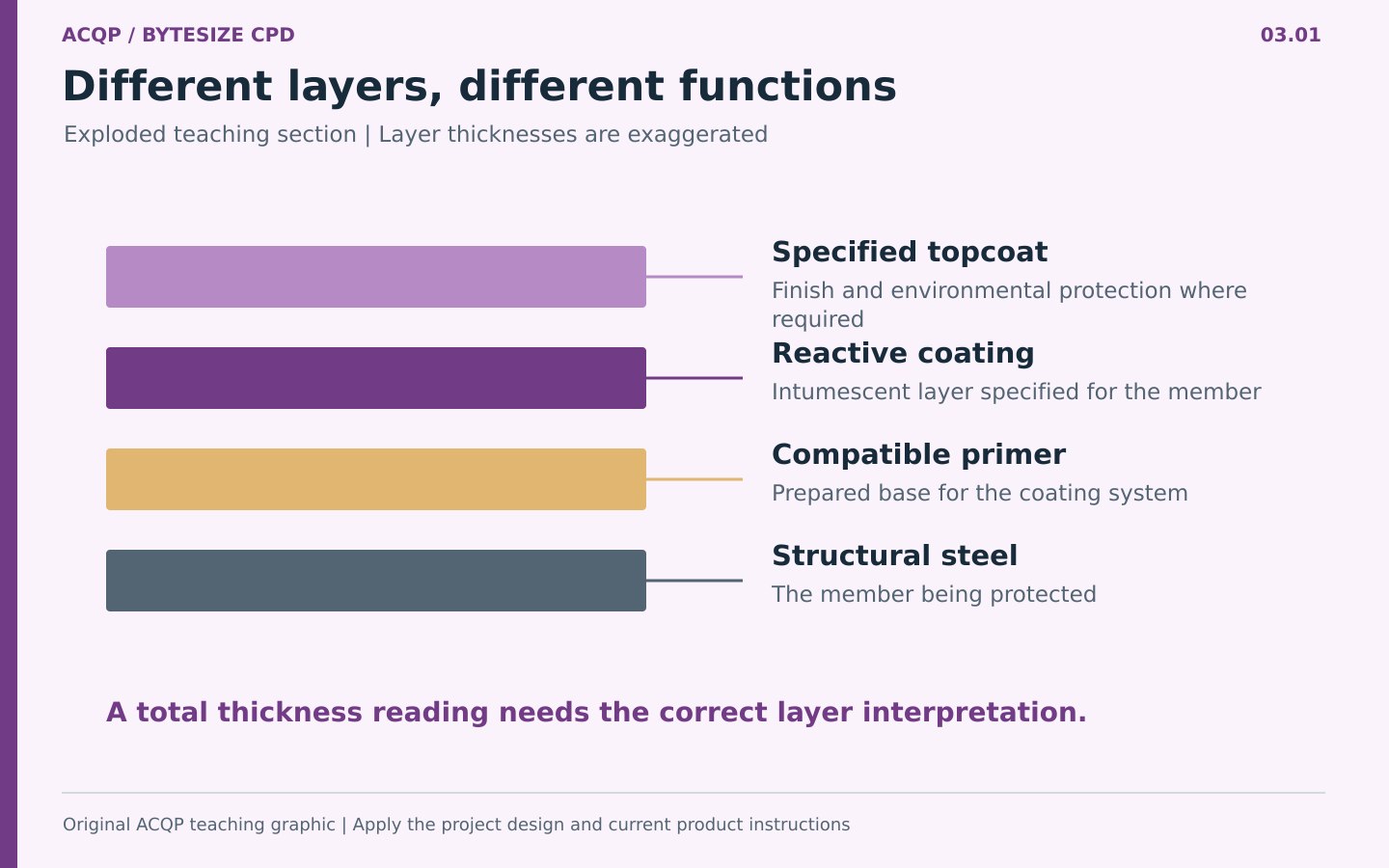
Begin with the member identification and specified system. The first graphic separates steel, primer, reactive coating and any specified topcoat. These layers have different functions. The drawing is conceptual, with thicknesses exaggerated for clarity; it is not a product specification.
2. Match the member to its schedule
Obtain the current coating schedule and identify the beam or column on site. The schedule should allow the required product and thickness to be related to the design. Relevant inputs can include the section, exposure to fire, design temperature and required resistance period. One reading on one column does not establish the condition of every member on a floor. Source 1
As an inspection practice, mark the inspected locations on a plan or elevation and use member IDs consistently in photographs, reports and defect records. If a steel section or fire design assumption changes, confirm whether the coating requirement changes too. Do not accept an old schedule simply because its title matches the building.
3. Understand the measurement
Wet film and dry film measurements serve different purposes. The inspection method, equipment, sampling, treatment of primer or topcoat thickness and acceptance criteria must be appropriate to the specified system. General coating guidance emphasises preparation, application conditions and film thickness control. Source 2
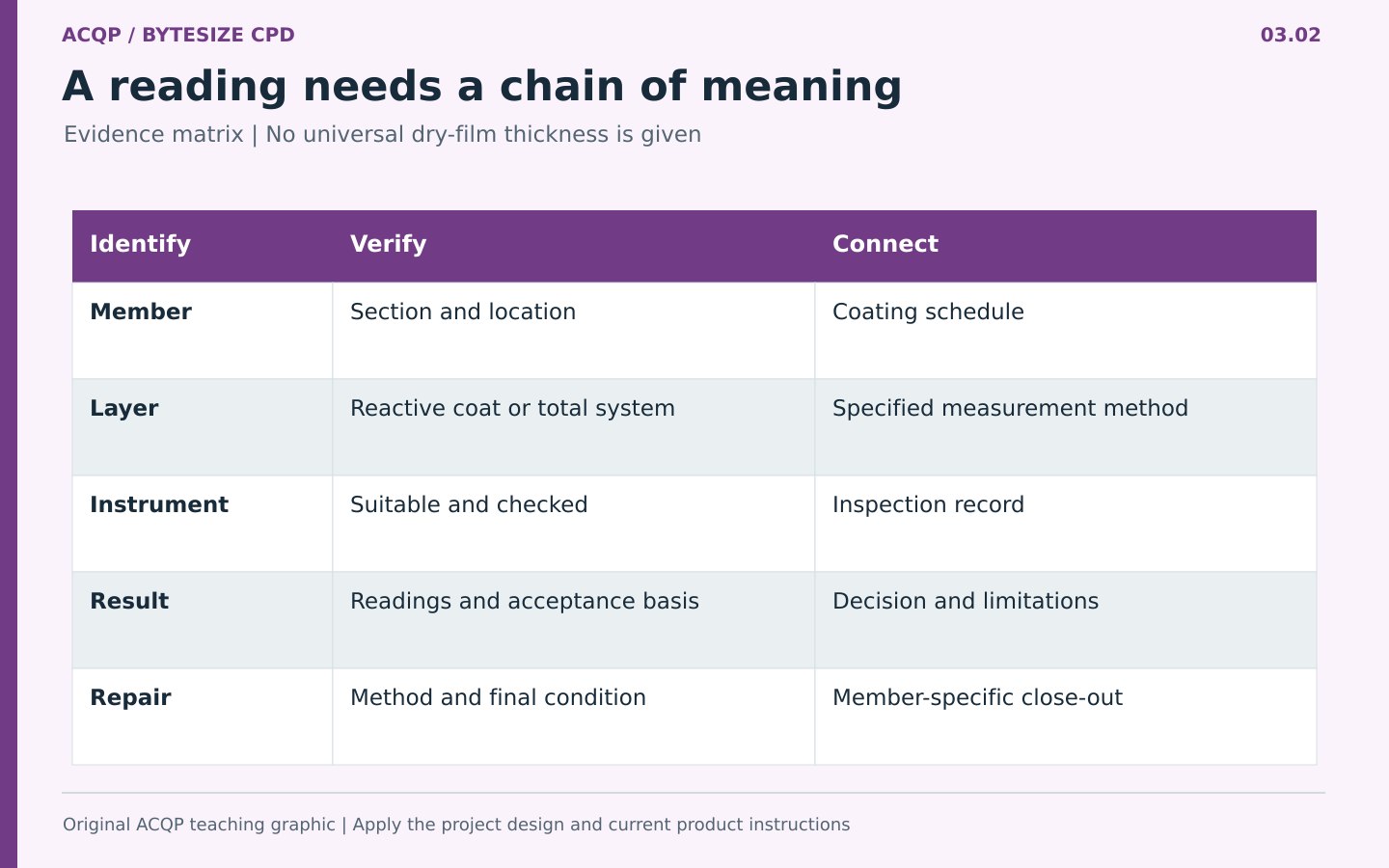
Our example graphic is an evidence matrix, not a pass/fail thickness chart. Before accepting a number, ask: which member, which surface, which layer, which instrument and which requirement? If those links are absent, a large spreadsheet of readings can still be uninformative. Record limitations, inaccessible areas and repairs requiring reinspection. Avoid comparing a total coating reading directly with a reactive-layer requirement without the correct method of interpretation.
4. Look at compatibility and condition
The primer and finish must be compatible with the intumescent system, and the system must suit the exposure environment. Read the approved specification and manufacturer's instructions. Check for mechanical damage, contamination, cracking, incomplete coverage and areas altered after application. Do not assume extra paint will improve performance; excessive or incompatible layers can create their own problems. Source 1 Source 2
Inspection should include awkward junctions and areas where later trades have worked. A service bracket can damage a previously accepted coating. A repair requires an agreed method and suitable materials, followed by appropriate verification. The whole repair trail should refer back to the member, including any restrictions on loading, access or concealment imposed by the project team.
5. Coordinate before closing the ceiling
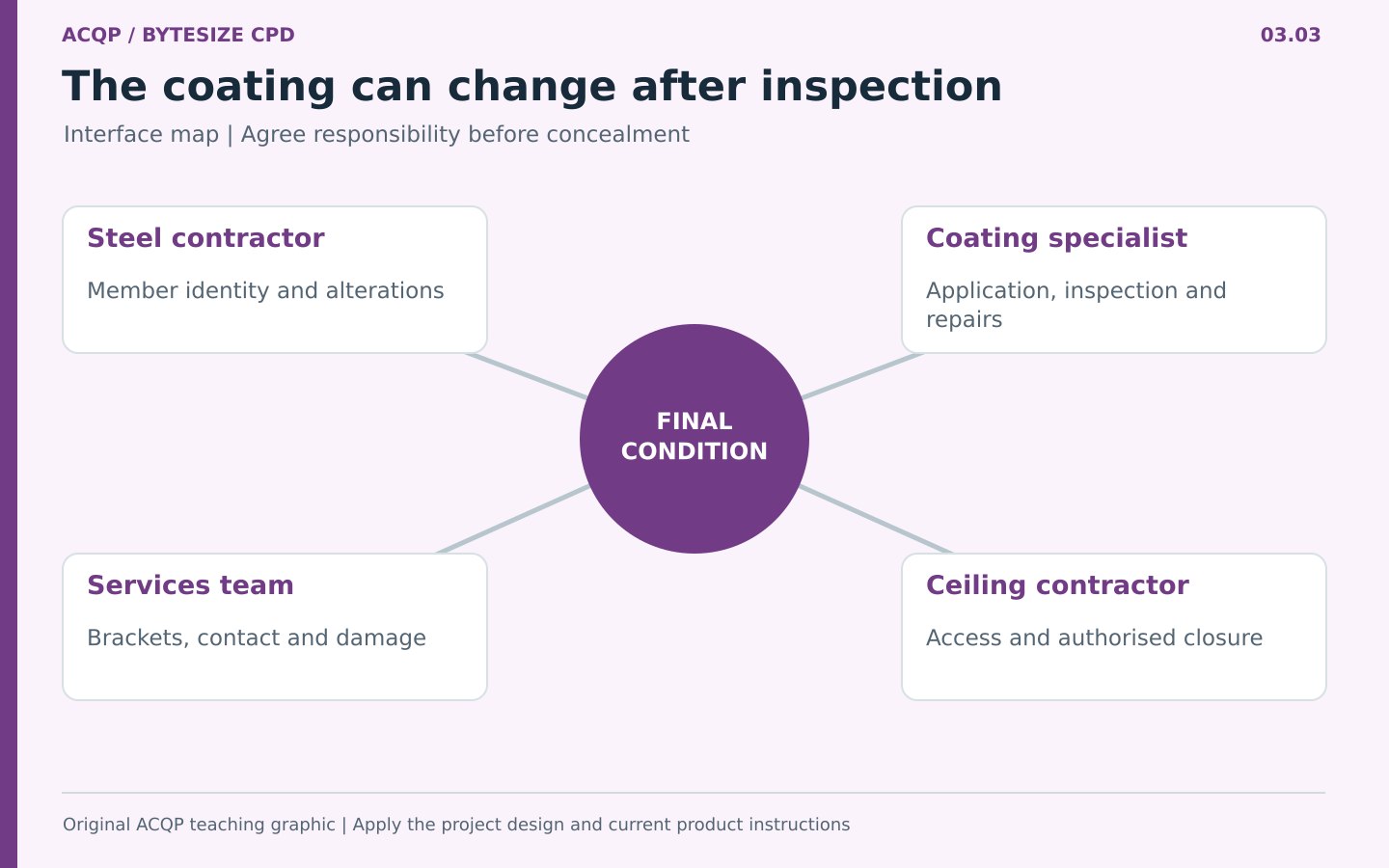
Use the interface map to identify who may affect the coating after the initial application: the steel contractor, coatings applicator, services team and ceiling contractor. The map illustrates possible responsibilities to agree, rather than prescribing a universal contract arrangement.
Build a final accessible inspection into the sequence. Record the status of coating defects and repairs before a ceiling or encasement hides them. Photographs should show the member reference and affected area. Keep the design schedule, product records, inspection results and repair verification together. If a late penetration or bracket is proposed, route the change back through the design and inspection process.
6. Three-minute site scenario
A column has a signed thickness report. During the following week, a services team clamps equipment to it and damages the finish. A decorator touches up the area with paint from a nearby tin. The ceiling contractor is ready to close the zone.
Your decision: does the earlier report justify closure?
Suggested response: no. Record the new damage and the unidentified repair material. Ask the responsible coating specialist and designer to determine the necessary treatment. Verify the completed repair using the specified process and update the member record. Keep the affected area accessible until the authorised release is recorded. The earlier report describes an earlier condition.
7. Check your understanding
Can a neat finish establish 60 minutes of fire resistance? No. The design, product and verified application must support the required performance.
Is every thickness reading directly comparable? No. The layer measured, method, location and acceptance criteria matter.
Does practical completion of the coating package end the inspection need? Later damage or changes may require further checks.
Your practical takeaway: connect each protected member to its design requirement and its final verified condition.
Sources and further reading
- Steel Construction Institute / BCSA: structural steel fire protection
Intumescent system purpose, layers and application. - Steel Construction Institute / BCSA: coating inspection
Preparation, environmental conditions and thickness inspection. - ASFP: technical resources
Signpost to specialist guidance; consult the relevant current coating guidance and project specification.
Prepared by the ACQP Training Centre. Public sources checked on 25 September 2026. Use the applicable project design, current product instructions and relevant standards. Record the time you actually spend.