Temporary works · 15 MINUTE CPD
Temporary Works: Control Changes, Loading and Removal
Recognise temporary works and keep the engineered arrangement under control. Focus on design assumptions, site changes and separate authorisation for loading and removal.


Temporary works remain engineered works at every stage.
Your 15-minute activity: allow eight minutes to study the article, supporting graphics and relevant linked guidance, four minutes for the scenario and self-check, and three minutes for reflection. Record the time you actually spend. Use the project design, applicable requirements and competent specialists for technical decisions.
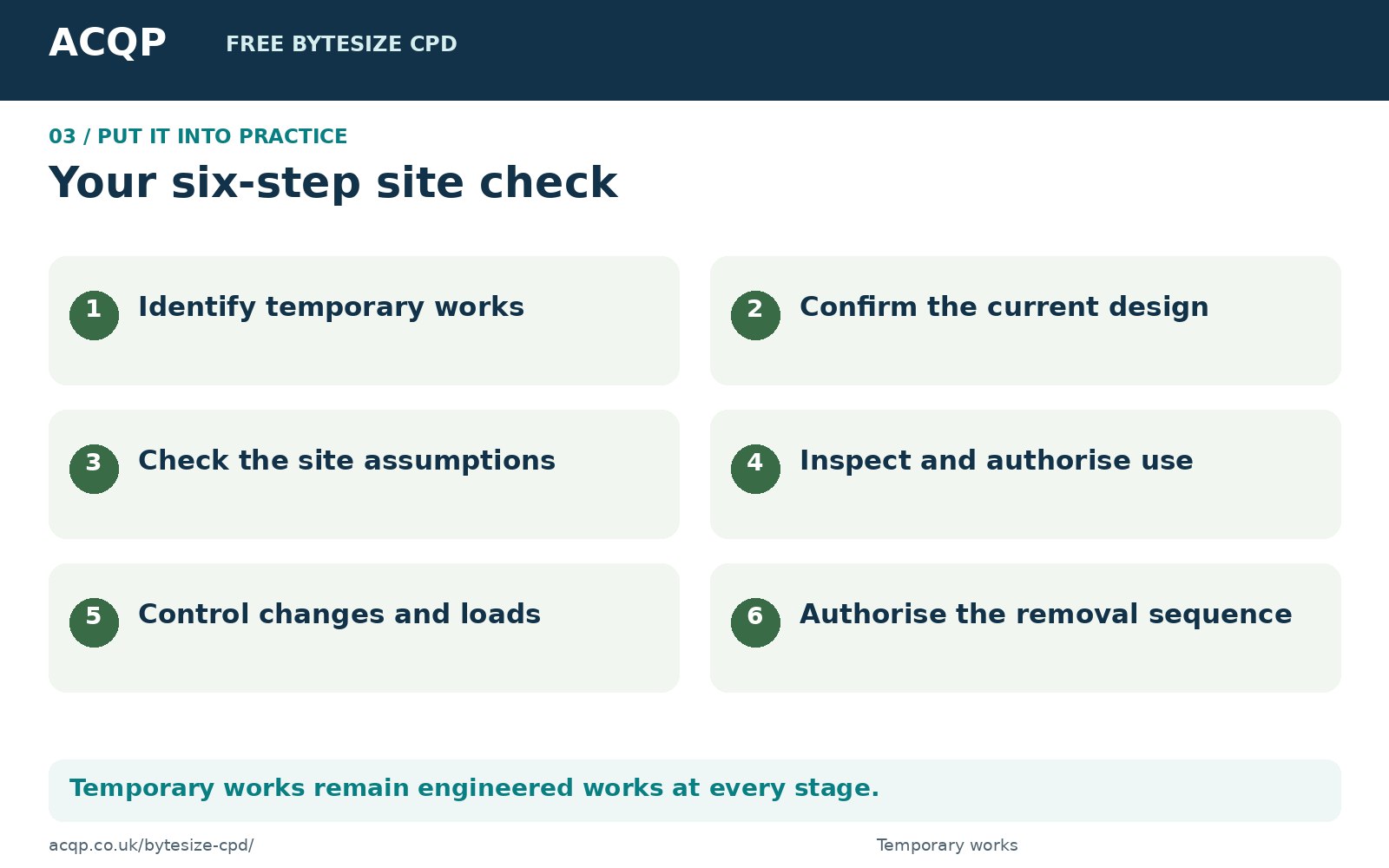
1. Recognise the temporary works around you
Temporary works enable or protect construction. HSE examples include propping, excavation support, falsework, access structures, working platforms, haul roads and site hoarding. Permanent works can also be used temporarily during the construction sequence.
Short duration does not make these arrangements less important. Identify them early and bring them into the project's control procedure. Ask who coordinates the design, checking, installation and release decisions. A formally appointed temporary works coordinator is an established management approach, but HSE explains that using that exact job title is not a universal legal requirement.
2. Check the assumptions as well as the drawing
The design needs to address the actual loading, geometry, ground or supporting structure, sequence and other relevant conditions. Proprietary equipment still has limits. A standard solution is suitable only when its assumptions and conditions are valid for the situation in which it is used.
Before work starts, confirm the current authorised design and required checks. Record the temporary works reference and location. Make the information usable for the installing team, including restrictions and the route for technical questions. An unread drawing in the site office does not help a worker deciding whether a support can be moved.
3. Treat small changes as engineering questions
A moved prop, altered base, extra stockpile or changed excavation sequence may affect the behaviour of the arrangement. Report the proposed change before implementing it and use the project's review and authorisation process. Do not accept “we always do it this way” as evidence that the altered condition has been assessed.
Following trades also need to understand the restrictions. Delivery routes, storage and access can introduce loads or damage not present during the original inspection. Check the arrangements after relevant events or changes in accordance with the control plan. Where there is an immediate concern about stability, keep people away and use the emergency escalation arrangements.
4. Separate the release decisions
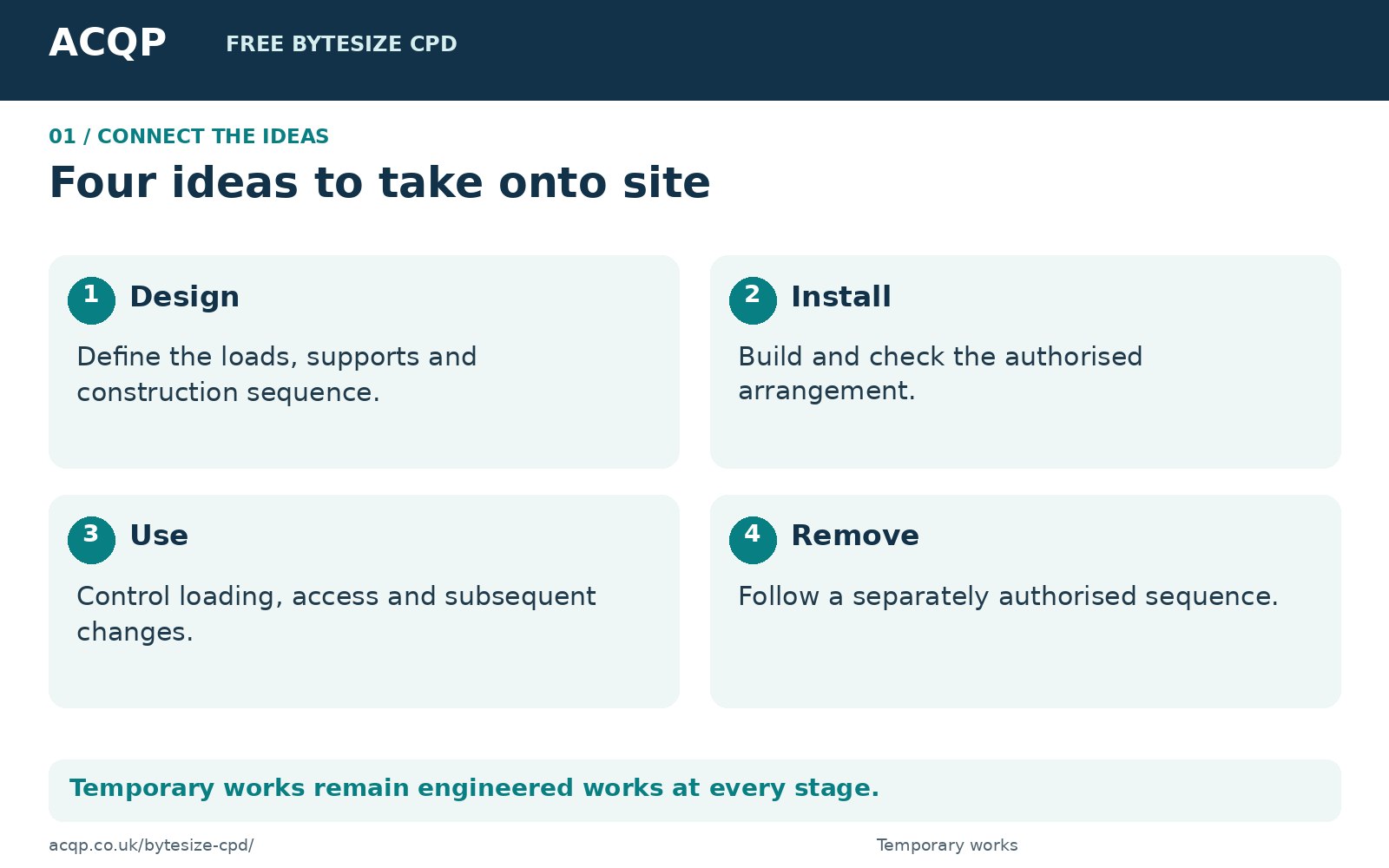
Completion of installation, permission to load, continued use and permission to remove are different stages. HSE's temporary works FAQs emphasise coordination from design through checking, loading and removal. The evidence needed at each stage depends on the arrangement and project procedure.
Use the required inspection and authorisation records, with a clear scope and responsible person. Removing one item can redistribute load to others, so the removal sequence is itself part of the plan. Do not infer permission from concrete appearance, elapsed time or the fact that a support looks redundant. Keep the record updated until the temporary works have been safely removed or formally incorporated into the permanent arrangement.
Site scenario: pause and decide
A delivery cannot pass a line of props supporting a new opening. A supervisor proposes moving one prop for ten minutes and replacing it afterwards. The props were inspected yesterday, and the permanent beam is already in position. What should the team do?
Before reading on: write down what you would check, who you would contact and what evidence would be needed.
Suggested response: Do not move the prop on that basis. Refer the proposed change to the person controlling the temporary works and obtain the necessary engineering review and authorisation. Establish an alternative delivery arrangement while it is resolved. Yesterday's inspection and the presence of a beam do not establish that the altered support or removal sequence is safe.
Check your understanding
Does proprietary equipment remove the need for an engineered arrangement?
No. Loads, configuration and site conditions still need to be assessed.
Does an installation inspection automatically authorise removal?
No. Removal is a separate stage requiring the relevant evidence and authorisation.
Take this to your next inspection
Temporary works remain engineered works at every stage.
References and further reading
Sources checked 23 September 2026. Follow the current applicable project documents and selected product instructions. Approved Documents referenced here apply to England; other UK nations have their own guidance.