Groundworks safety · 15 MINUTE CPD
Underground Services: Plan, Locate, Then Excavate Safely
Use service records as part of a safe system, not as a guarantee. Check the work area, location evidence, excavation method and response when conditions differ from the plan.


A permit is useful only when its scope matches the work.
Your 15-minute activity: allow eight minutes to study the article, supporting graphics and relevant linked guidance, four minutes for the scenario and self-check, and three minutes for reflection. Record the time you actually spend. Use the project design, applicable requirements and competent specialists for technical decisions.
1. Start with a coordinated plan
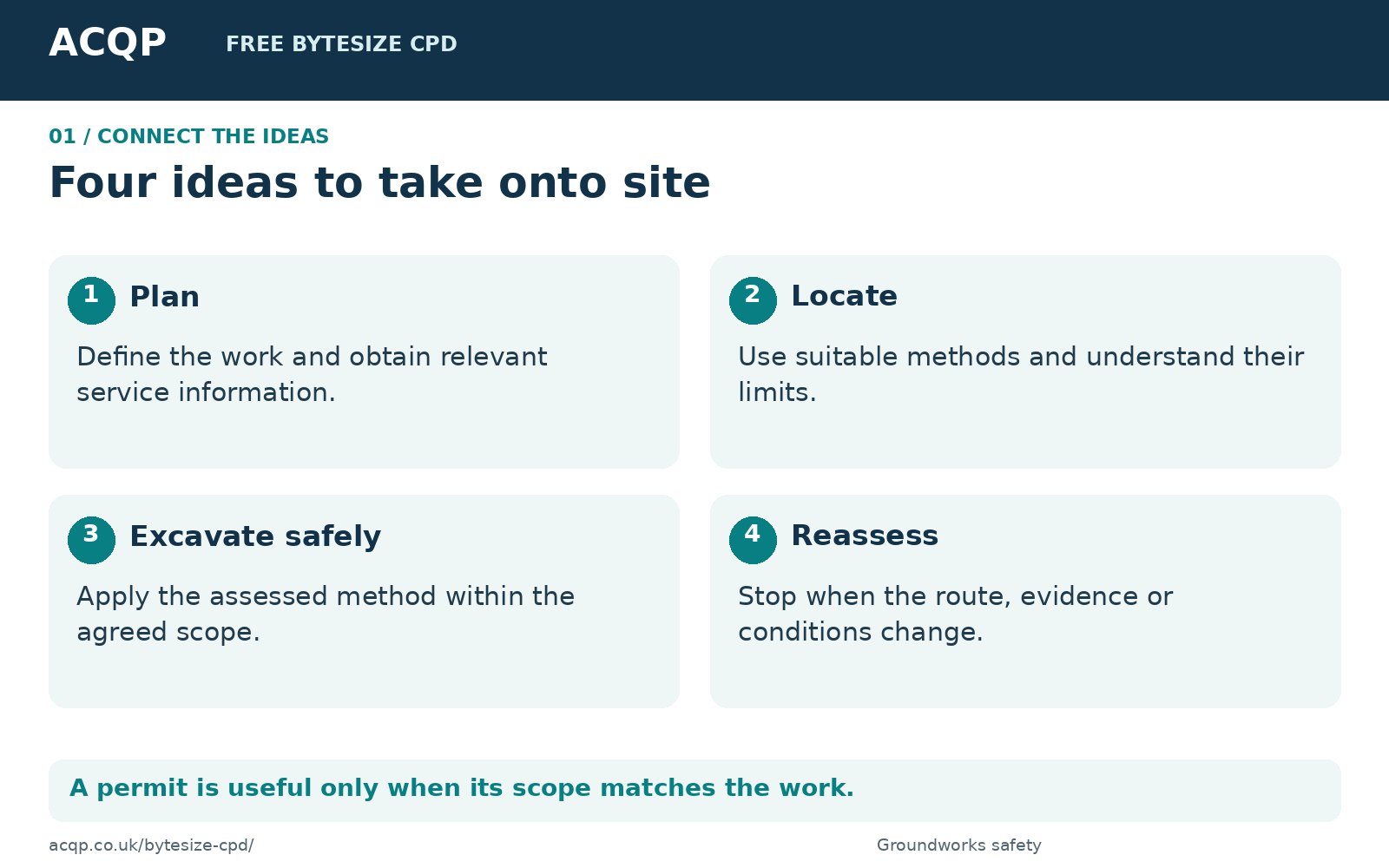
HSE's HSG47 describes three linked elements: planning the work, locating and identifying buried services, and safe excavation. These work together. A drawing by itself cannot make digging safe, and a detector sweep cannot replace planning.
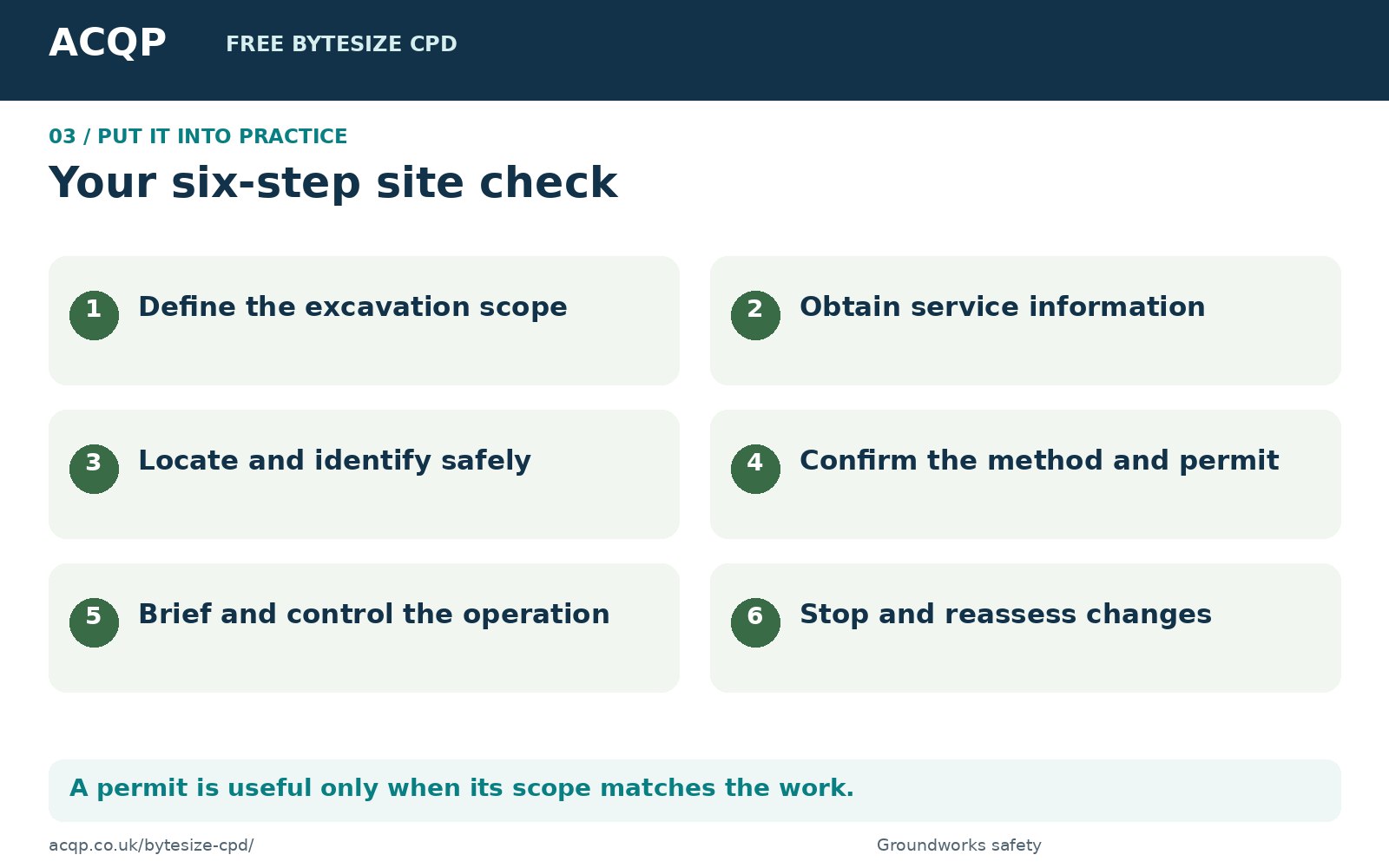
Define the exact operation, boundaries, depth and sequence. Obtain relevant information from service owners and the project team, including private services where applicable. Consider previous alterations and temporary supplies. Plan how the work will protect people nearby and what will happen if an unknown service or discrepancy is found.
2. Understand what the information can show
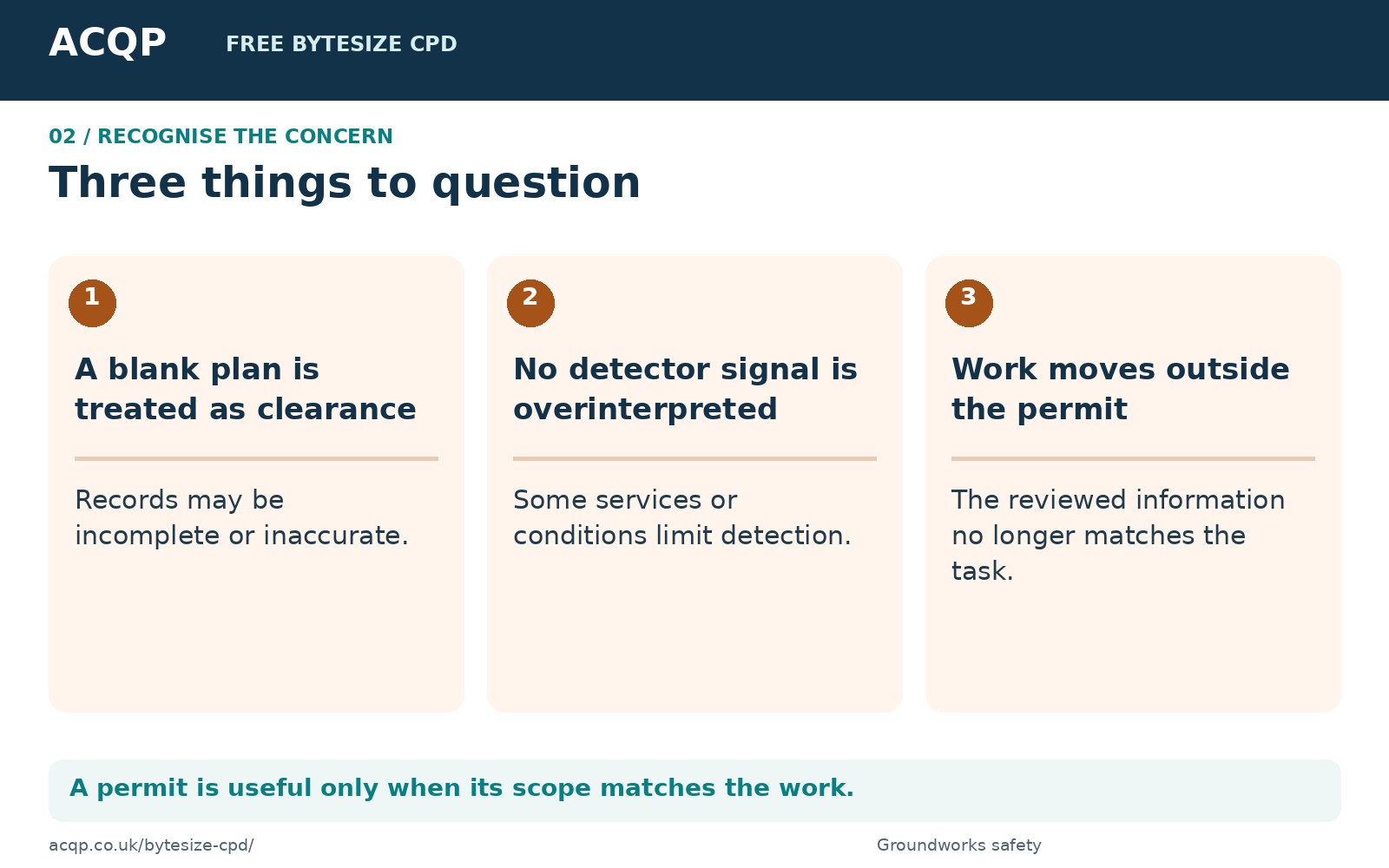
Service plans help establish possible routes but may not accurately show every position or depth. HSE's underground-cable guidance warns against assumptions and calls for appropriate locating and safe digging procedures. Absence from a drawing is not proof that the ground is clear.
Suitable locating equipment must be used by people who understand its capabilities and limitations. Different services and conditions need appropriate techniques. Record the work area and findings, and keep markings understandable. A “no signal” result is not a universal certificate of absence, particularly for services the equipment cannot reliably identify.
3. Make the permit match the task
Where the project uses a permit to dig, its value lies in confirming the assessment and controls for a defined operation. Check that the location, date, work limits, service information, locating findings, precautions and responsible people are clear. The team doing the work must understand those conditions.
A permit is not a transfer of all responsibility to the person who signed it. If the excavation moves beyond the stated area or the method changes, return to the authorised review process. Keep the safe excavation method consistent with the assessed service risks and specialist advice. Do not use a generic separation distance or assume hand digging is harmless.
4. Respond when reality differs
If an unexpected duct, cable, pipe, marker or inconsistent ground condition is encountered, stop the affected operation and obtain competent direction. Do not pull, cut, move or test an unidentified service. Treat a cable as potentially live unless the proper isolation and confirmation arrangements establish otherwise.
Damage must be reported even where no immediate failure is visible. HSE identifies unrepaired, previously damaged cables as a cause of later incidents. Follow the emergency plan if a strike, leak or other dangerous event occurs, keep people away and contact the appropriate emergency and service-owner response. Record what was found and update the information before work resumes.
Site scenario: pause and decide
A permit covers a trench beside a new building. The team shifts the route to avoid a delivery vehicle, outside the scanned and marked strip. An old drawing shows no service in that position. The excavator is ready to continue. What should happen?
Before reading on: write down what you would check, who you would contact and what evidence would be needed.
Suggested response: Stop the affected excavation and return to the permit and planning process. Assess the revised route, obtain the necessary locating and service information, and agree the safe method and updated authorisation. Brief the workforce on the new limits and emergency arrangements. The earlier permit and a blank drawing area do not cover the changed operation.
Check your understanding
Does a detector finding no signal prove there are no services?
No. Equipment limitations and service types must be considered with the other information.
Why report damage even if the service still works?
Hidden damage can create a later danger; it needs the service owner's assessment and appropriate action.
Take this to your next inspection
A permit is useful only when its scope matches the work.
References and further reading
Sources checked 23 September 2026. Follow the current applicable project documents and selected product instructions. Approved Documents referenced here apply to England; other UK nations have their own guidance.