Health and safety · 15 MINUTE CPD
Construction Dust: Control It at the Task
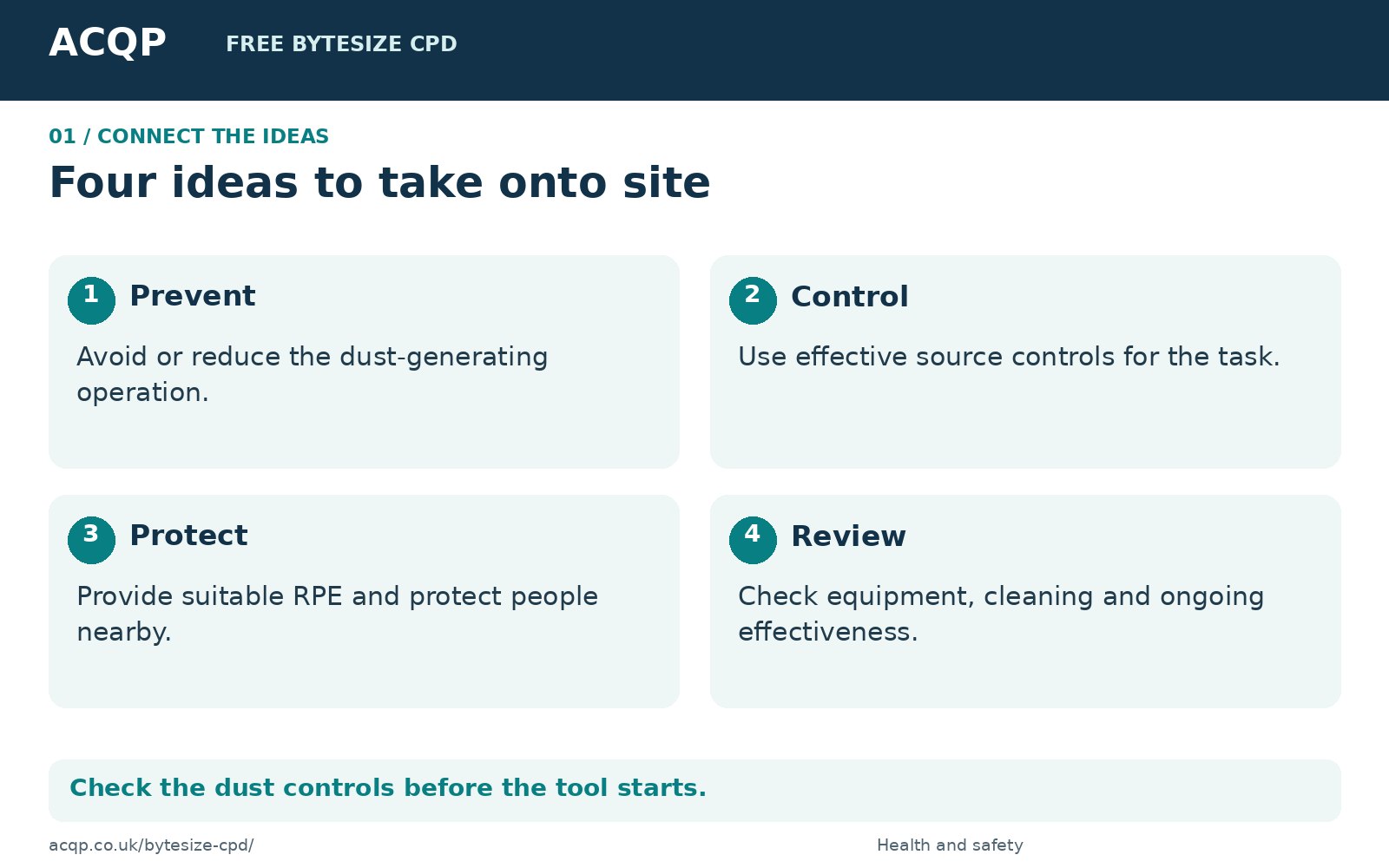
Recognise dust-generating tasks and check the controls before work starts. Focus on prevention, effective extraction or suppression, suitable respiratory protection and safe cleaning.

Check the dust controls before the tool starts.
Your 15-minute activity: allow eight minutes to study the article, supporting graphics and relevant linked guidance, four minutes for the scenario and self-check, and three minutes for reflection. Record the time you actually spend. Use the project design, applicable requirements and competent specialists for technical decisions.
1. Assess the work, not just the material
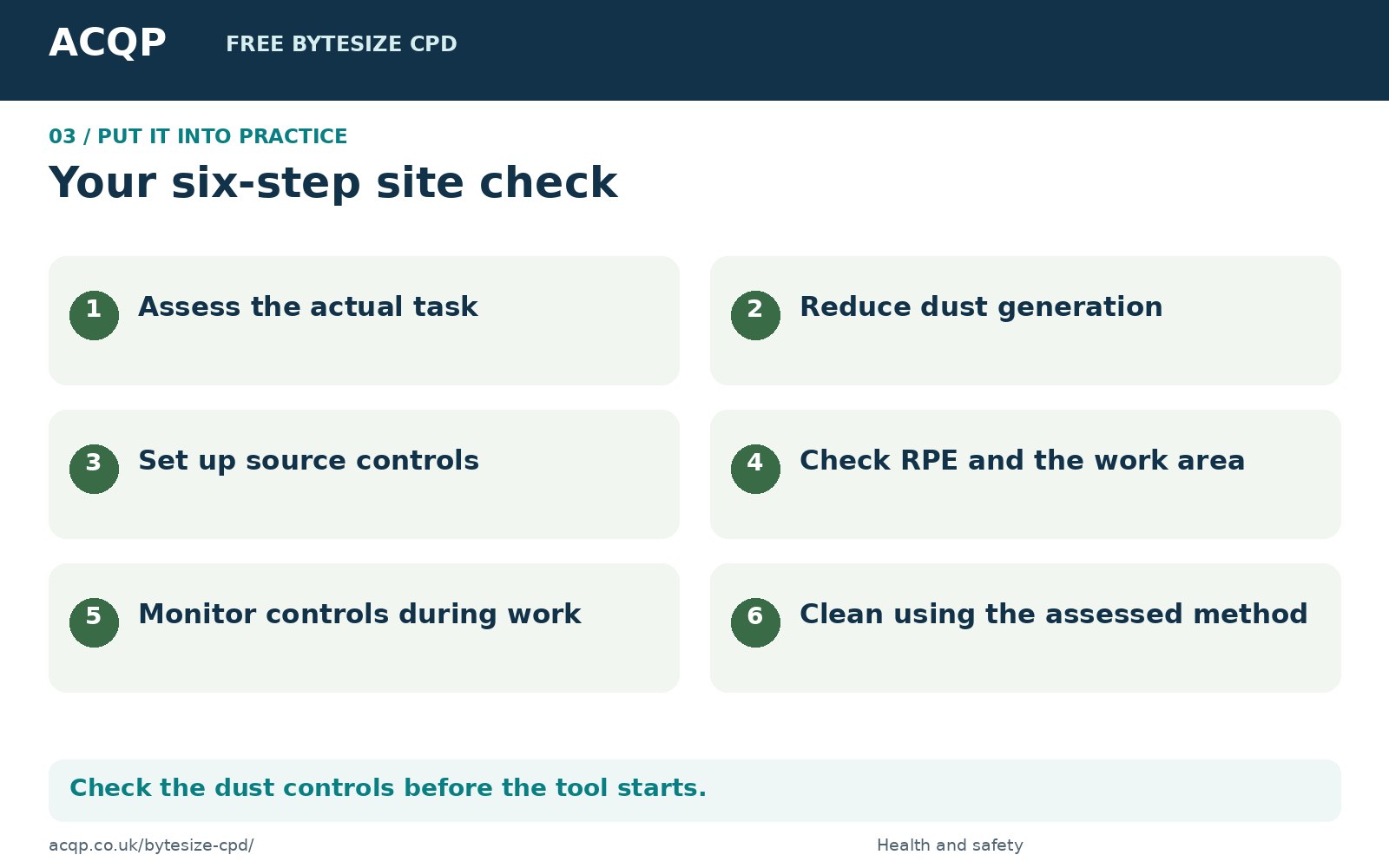
Cutting, grinding, drilling and cleaning can release hazardous dust. Silica-containing materials, wood and other construction products present different hazards. HSE warns that repeated exposure can cause serious lung disease. The size of the task, its duration, the tool, enclosure and people nearby all affect the assessment.
Read the task's assessment and method before work starts. A product safety sheet helps identify hazards but does not replace an assessment of the actual operation. A short job is not automatically low risk, and the absence of a large visible cloud does not establish that exposure is adequately controlled.
2. Reduce generation and control the source
First consider whether the work can avoid or reduce dust generation, for example through design coordination, correctly sized materials or an appropriate alternative method. Where dust remains, select effective controls for the task, such as suitable on-tool extraction or water suppression.
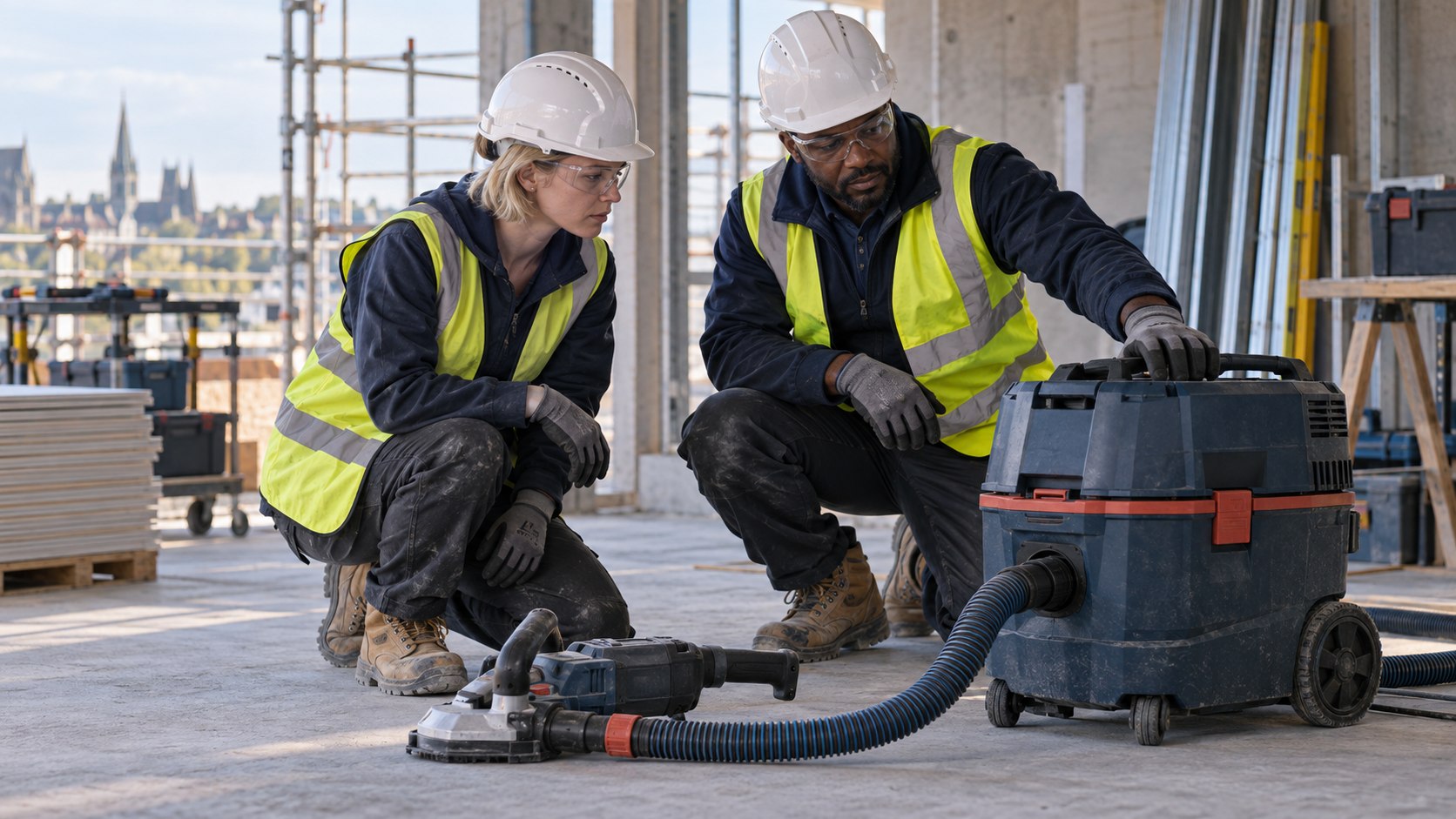
Check the equipment as a working system. The tool, shroud, hose, extraction unit and filtration must be appropriate and used as intended. For water suppression, the supply and delivery arrangement must remain effective. Do not assume any vacuum cleaner or a quick spray of water provides the necessary protection. Follow the task-specific HSE and equipment guidance.
3. Check people, surroundings and RPE
Keep people who are not involved away from the exposure area through the assessed arrangements. Respiratory protective equipment (RPE) may still be needed alongside source control. Its type and protection level must suit the task and wearer. Tight-fitting facepieces require fit testing and a good seal when worn; facial hair in the seal area can prevent that seal. Use a suitable alternative where a tight-fitting mask cannot be worn effectively.
Confirm training, maintenance and storage arrangements. Check controls during work rather than only at the morning briefing. A damaged hose, missing shroud or reduced extraction should trigger the agreed response. Stop the affected dust-generating task if its required controls are ineffective and obtain a safe resolution.
4. Include cleaning and verification
HSE advises avoiding dry sweeping where possible because it can raise hazardous dust. Use the assessed cleaning method, with suitable equipment and arrangements for collected waste. Do not undo good cutting controls by sweeping the same dust into the air at the end of the shift.
Supervision, inspection and maintenance help establish whether controls remain effective. Where required, exposure monitoring measures the airborne exposure associated with work; health surveillance concerns workers' health and is a different activity. Neither is replaced by a photograph of a mask. Record defects, actions and any changes to the method so the next shift understands what is safe to resume.
Site scenario: pause and decide
A worker is chasing a concrete wall. The extraction hose is split, visible dust escapes, and another trade is working nearby. The supervisor suggests finishing the final few metres because masks are being worn. What is the immediate priority?
Before reading on: write down what you would check, who you would contact and what evidence would be needed.
Suggested response: Stop the affected dust-generating task and keep others away in accordance with the site arrangements. Report and repair or replace the defective control equipment, review the task controls and confirm suitable RPE before resuming. Clean the area using the assessed method. The short remaining duration and presence of masks do not justify continuing with ineffective source controls.
Check your understanding
Does a dust mask replace extraction or suppression?
No. Prevent or reduce dust and control it at source; suitable RPE supplements the controls where required.
Does exposure monitoring tell you whether a worker has lung disease?
No. It measures exposure. Health surveillance is a separate process.
Take this to your next inspection
Check the dust controls before the tool starts.
References and further reading
Sources checked 23 September 2026. Follow the current applicable project documents and selected product instructions. Approved Documents referenced here apply to England; other UK nations have their own guidance.