Timber construction · 15 MINUTE CPD
Timber-Frame Moisture: Measure Before You Close
Plan protection, record moisture checks and resolve wetting before enclosure. Learn why one dry-looking surface or one isolated meter reading is not enough.


A moisture record must describe the area you are about to cover.
Your 15-minute activity: allow eight minutes to study the article, supporting graphics and relevant linked guidance, four minutes for the scenario and self-check, and three minutes for reflection. Record the time you actually spend. Use the project design, applicable requirements and competent specialists for technical decisions.
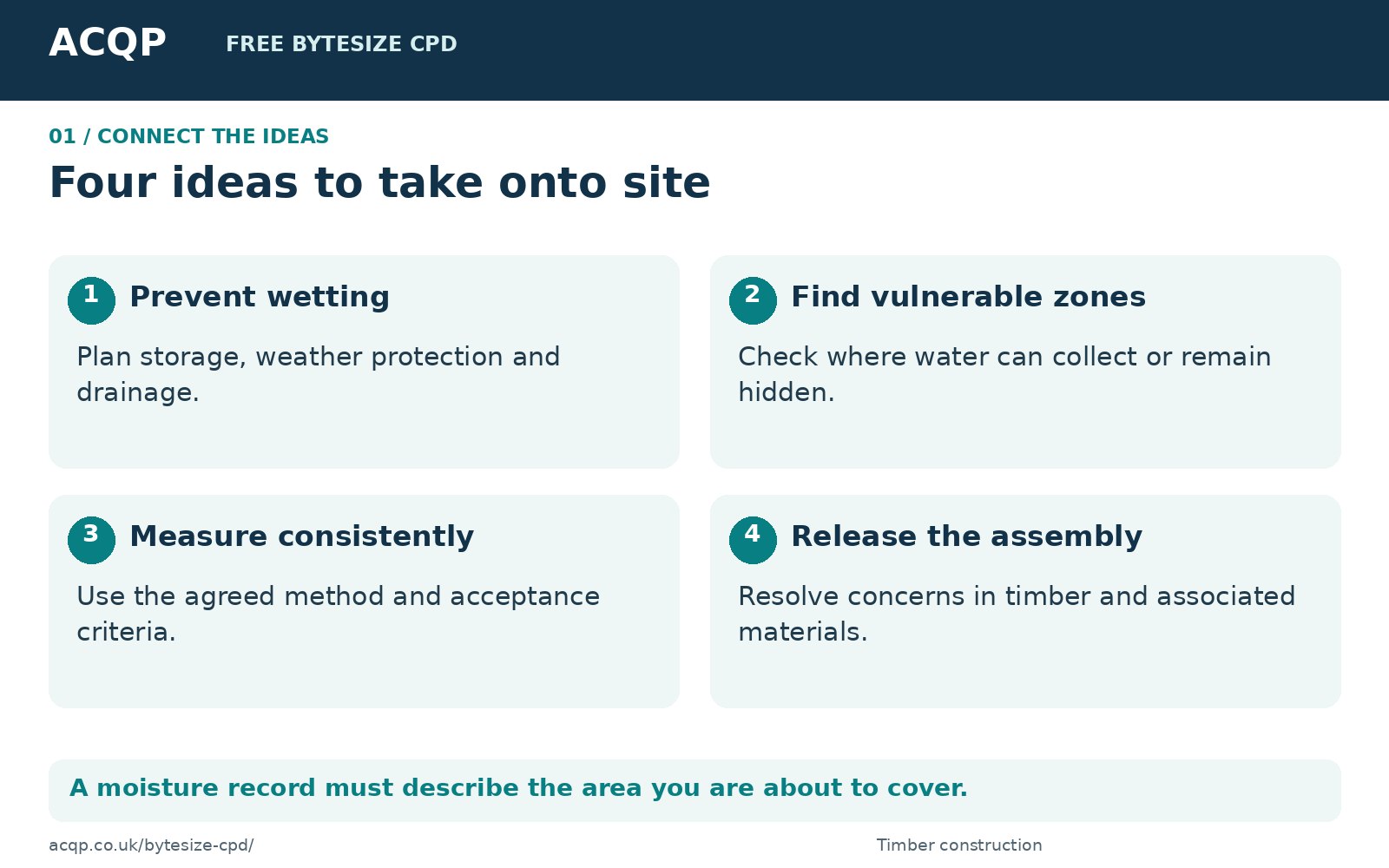
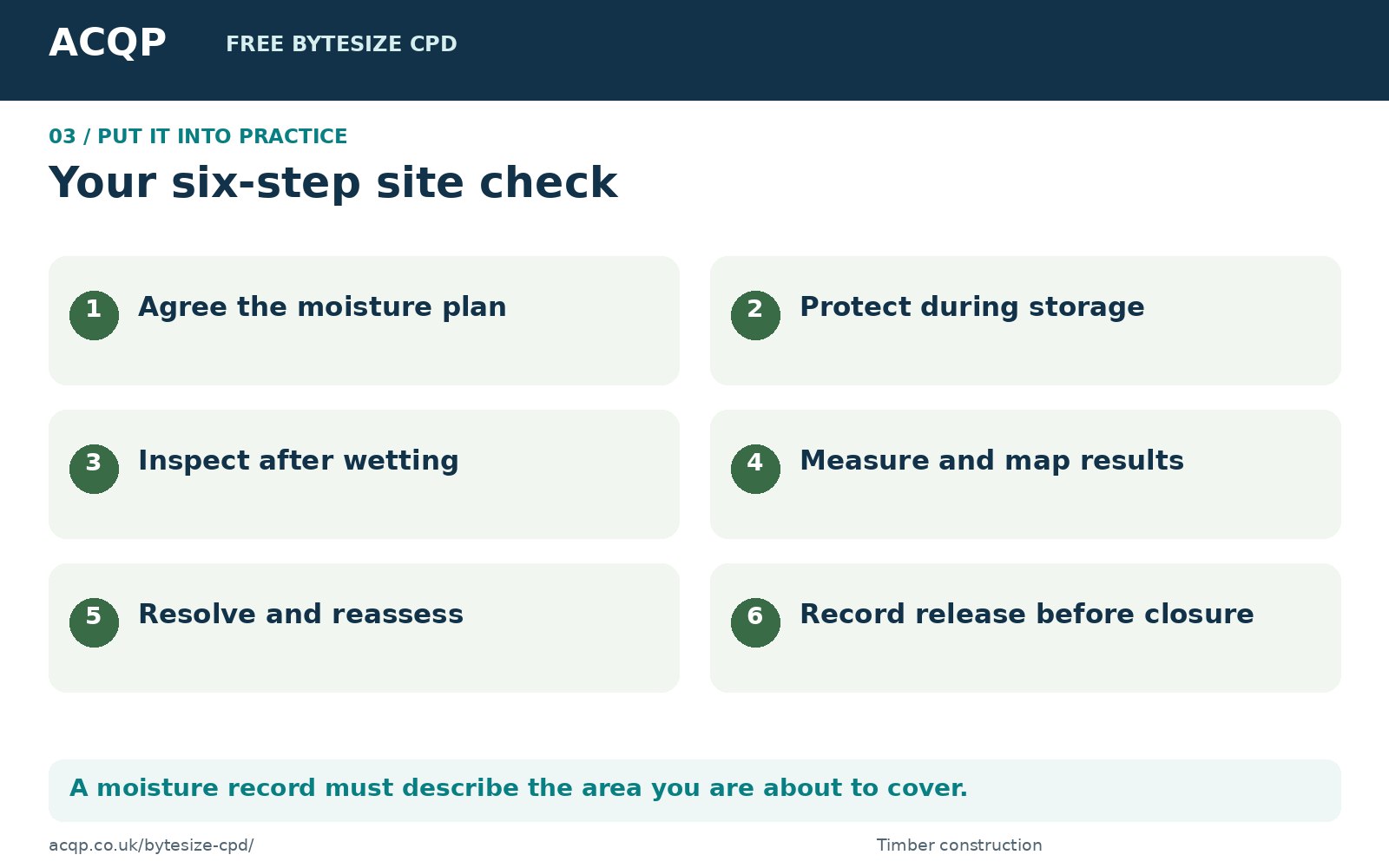
1. Plan protection through the sequence
Structural timber needs a moisture-management approach from delivery through erection, enclosure and use. The Structural Timber Association promotes early allocation of responsibilities and coordinated planning across the project. Temporary protection, drainage and the route to a weathertight envelope should be part of the build sequence.
Ask who inspects stored components after rain, who removes trapped water and who decides whether affected work is ready to close. Agree escalation before the programme becomes pressured. The aim is to prevent unmanaged wetting and avoid concealing a problem behind insulation or lining.
2. Look where water can remain
Inspect storage supports, covers, exposed edges, sole-plate areas, floor zones and junctions where water can collect. Check whether temporary coverings have actually shed water or created pockets. Follow supplier instructions for ventilation and protection; sealing wet components inside a cover is not automatically an effective drying method.
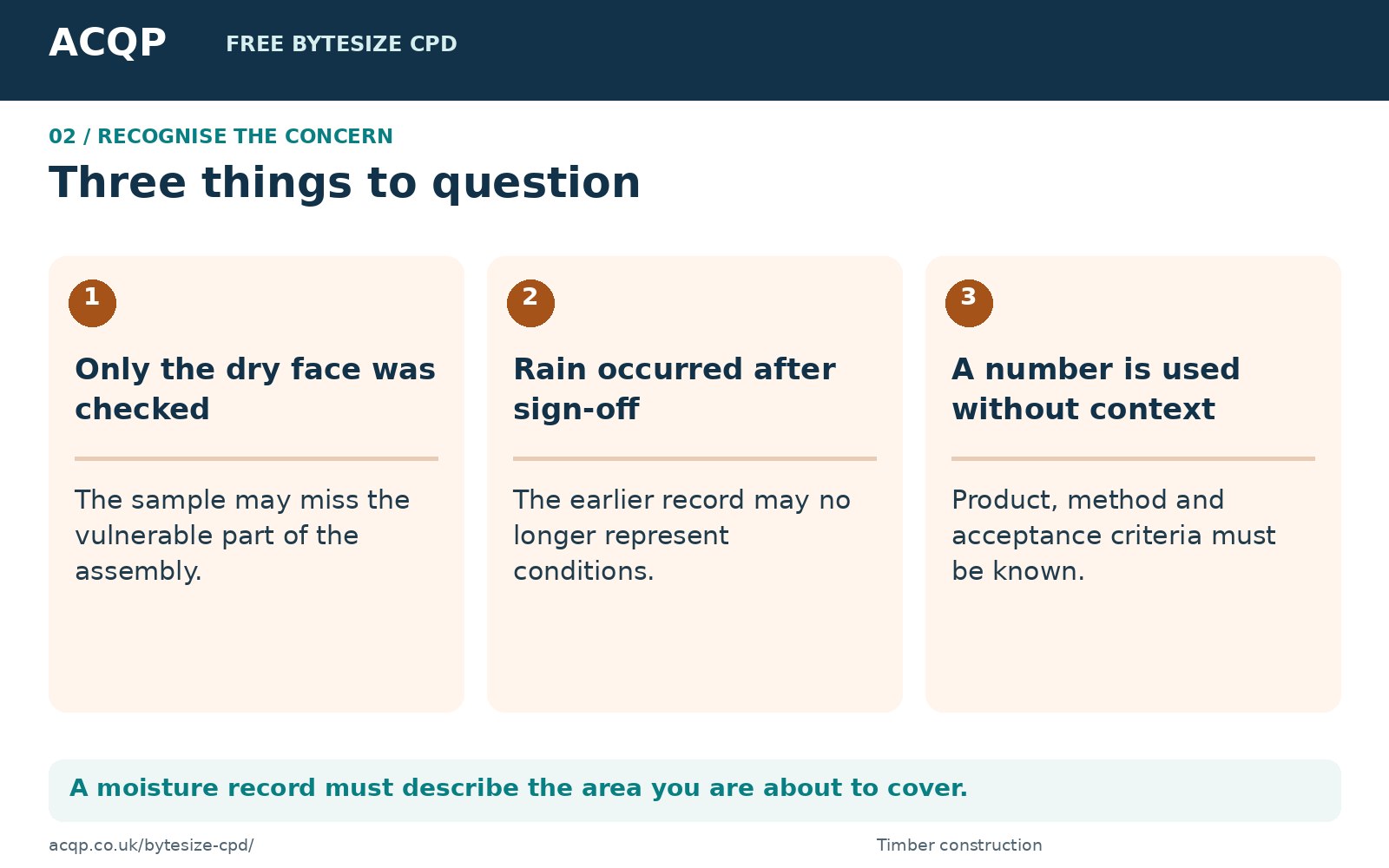
Document the location and duration of known wetting, including uncertainties. An apparently dry face may not represent concealed layers or a previously soaked junction. Where staining, distortion, mould or damaged boards are present, refer the condition for competent assessment. Moisture readings alone do not diagnose every form of deterioration.
3. Measure using an agreed method
Use the project's moisture-management plan and component manufacturer's requirements to establish the method, sampling locations and acceptance criteria. Timber species, product type, meter settings, depth and temperature can affect interpretation. The person taking readings needs to understand the instrument and its limitations.
The NHBC timber-frame chapter gives less than 20% moisture content for framing timbers before the relevant internal linings are installed in the cited edition. Treat this as a requirement within its stated scope, not a universal target for every timber product, finish or assembly. Confirm the applicable current warranty standard and any stricter project or supplier limit before release.
4. Link measurements to a release decision
A useful record shows the plot, room, element, precise reading locations, date, instrument, settings, results and relevant conditions. Include vulnerable locations rather than selecting only the easiest dry areas. Where repeat readings are required, make them comparable and retain the earlier results.
If the criteria are not met, agree protection, drying and reassessment with the responsible specialists. Check whether associated insulation, sheathing or finishes have also been affected. Record who accepts the evidence and what may now proceed. If rain or a leak occurs after release, reassess the affected area before enclosure. Do not allow a previous satisfactory sheet to override a changed condition.
Site scenario: pause and decide
An external timber-frame wall was signed off for lining on Monday. On Tuesday a temporary roof covering failed and water collected at the base. By Wednesday the visible stud faces look dry. The lining team wants to use Monday's record. How should this be handled?
Before reading on: write down what you would check, who you would contact and what evidence would be needed.
Suggested response: Treat the new wetting as a changed condition. Identify and document the affected wall and associated materials, restore the protection and apply the agreed assessment and measurement plan. Obtain any necessary specialist advice, repeat checks and record a new release when the relevant criteria are met. Monday's readings do not describe Tuesday's event.
Check your understanding
Does one surface reading establish the condition of the whole wall?
No. Sampling and interpretation must address the relevant elements and vulnerable locations.
Does meeting a moisture limit prove no other damage occurred?
No. Distortion, deterioration and affected associated materials may require separate assessment.
Take this to your next inspection
A moisture record must describe the area you are about to cover.
References and further reading
Sources checked 23 September 2026. Follow the current applicable project documents and selected product instructions. Approved Documents referenced here apply to England; other UK nations have their own guidance.