Building performance · 15 MINUTE CPD
Airtightness: Keep the Air Barrier Continuous
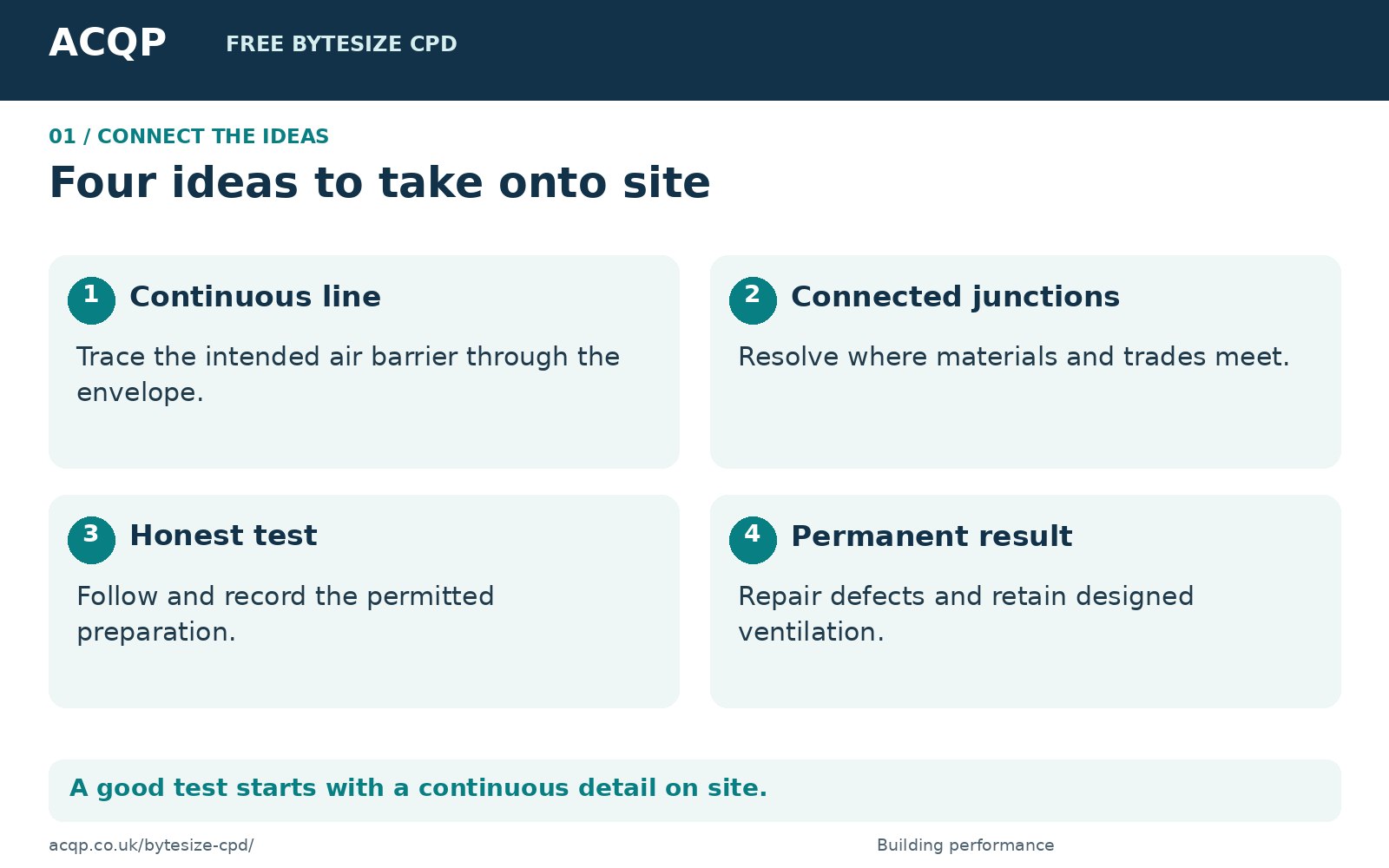
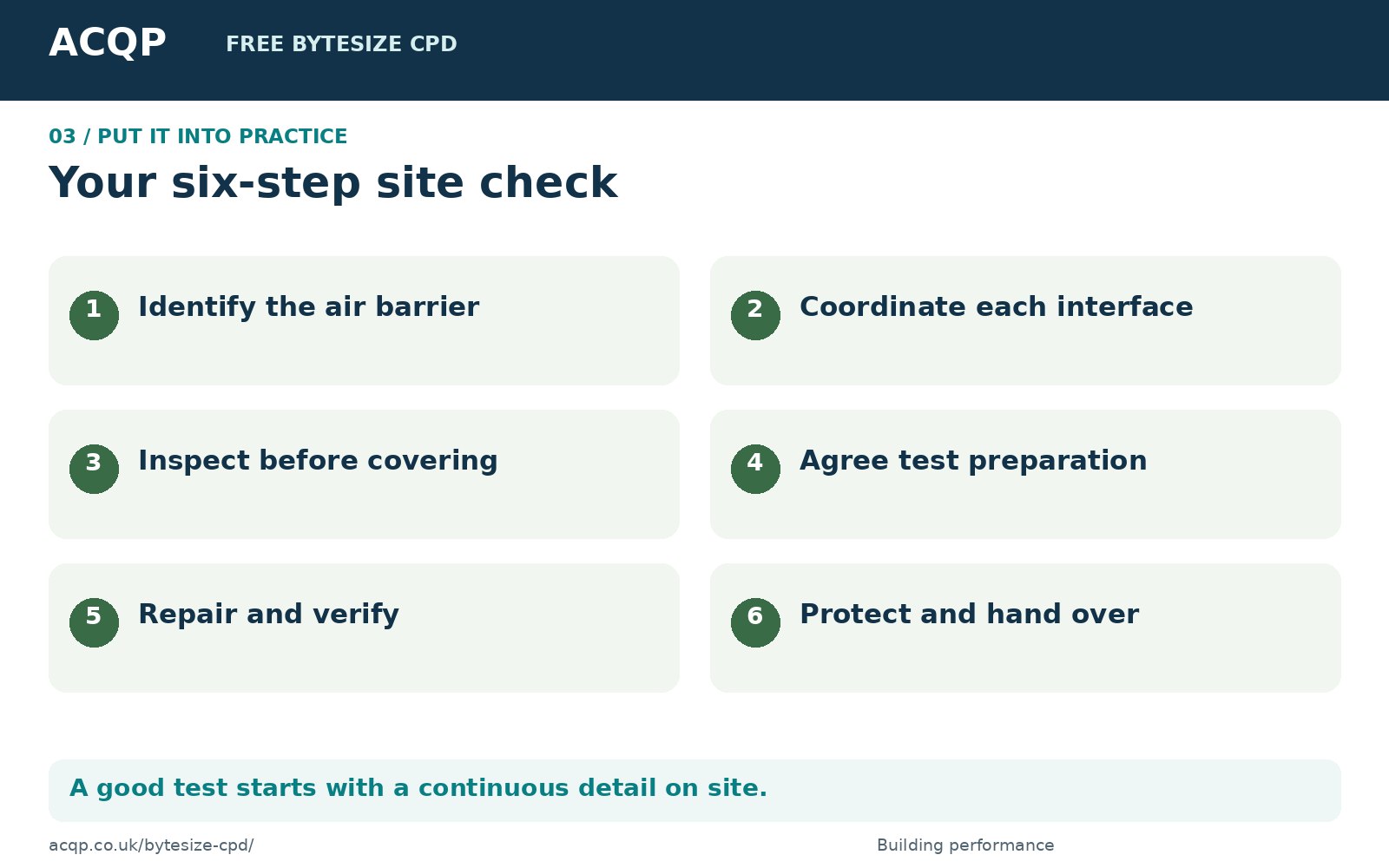
Trace the air barrier through junctions and penetrations. Plan inspections and testing early, distinguish permanent repairs from test preparation and protect the designed ventilation.


A good test starts with a continuous detail on site.
Your 15-minute activity: allow eight minutes to study the article, supporting graphics and relevant linked guidance, four minutes for the scenario and self-check, and three minutes for reflection. Record the time you actually spend. Use the project design, applicable requirements and competent specialists for technical decisions.
1. Find the air barrier on the drawing
The air barrier is the connected layer or combination of materials intended to limit uncontrolled air leakage through the building envelope. It may use membranes, plaster, boards or other specified components. Its position must be clear at changes in construction, openings and service penetrations.
Trace the line on a section through a room. Where does it cross the floor edge, meet the window and connect to the roof? If the line stops at a trade boundary, ask how the connection is made. Airtightness and vapour control can involve the same product in some designs, but their functions are different; do not assume any vapour-control sheet automatically solves every air-leakage junction.
2. Plan the difficult interfaces early
ATTMA encourages early involvement of the testing specialist and coordination between the people responsible for walls, roof, windows and other envelope work. A junction that will become inaccessible needs a practical installation sequence and an inspection opportunity.
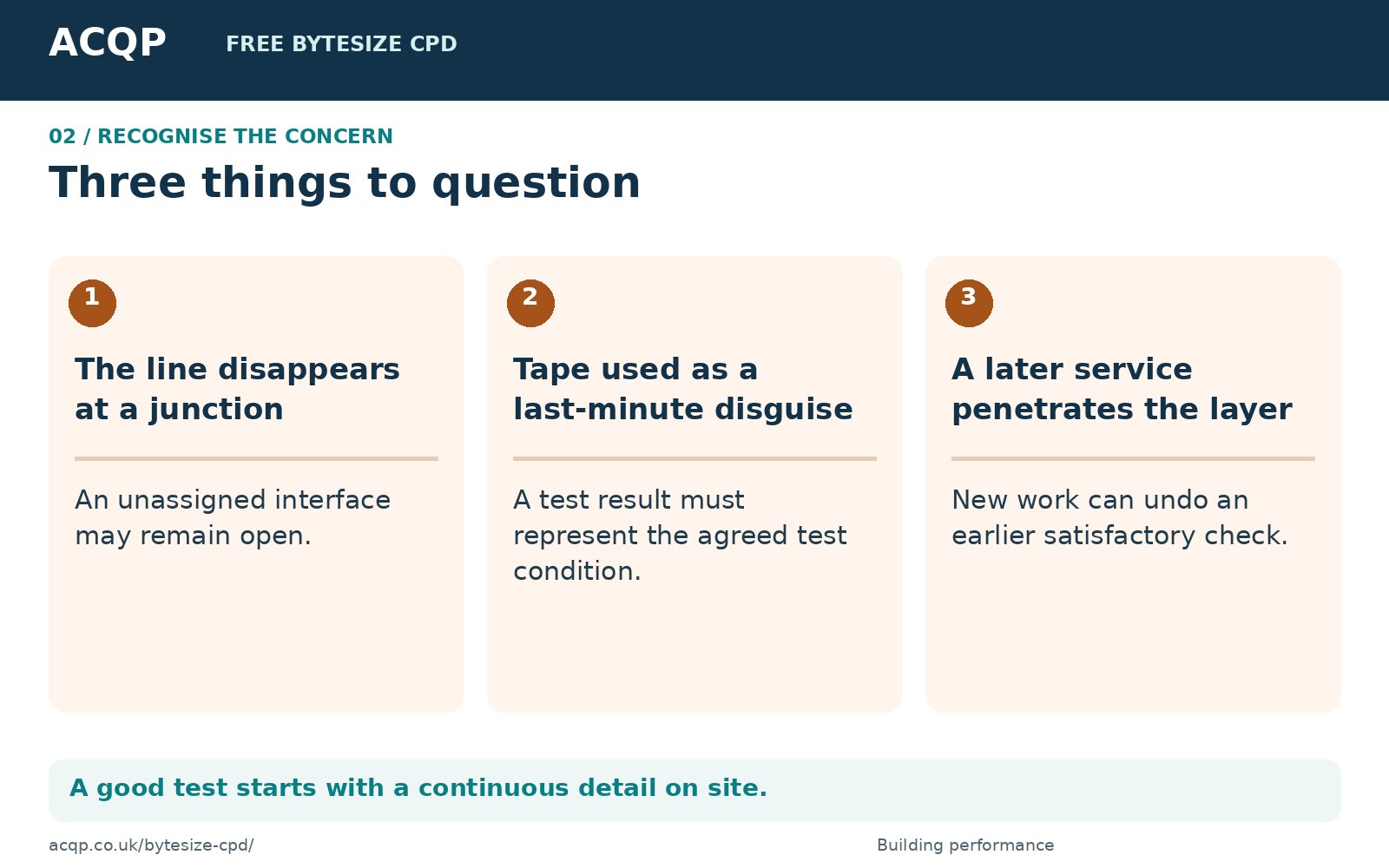
Identify who prepares the substrate and who completes the connection. Follow the specified product instructions for compatibility, surface condition, application and protection. Do not substitute tape simply because it appears sticky. Look for unsupported joints, damaged layers and unsealed later penetrations, then compare them with the authorised detail.
3. Use testing as part of quality control
Agree the applicable test method, performance target, building boundary and preparation with a competent tester. For England, Part L guidance depends on the building and regulatory regime, including transitional arrangements. Avoid copying a target or sampling rule from another project.
An early diagnostic test can help locate leakage while repairs remain accessible. It is not automatically the required final compliance test. Keep the two purposes clear. An air-pressure result also does not prove that insulation, rain resistance or ventilation is satisfactory; those require their own design and verification.
4. Keep preparation honest and repairs permanent
Some openings are dealt with in a defined way under the test method. Record what has been temporarily sealed and why. Do not cover workmanship defects or seal an access hatch merely to obtain a favourable number. ATTMA's test-readiness guidance warns against temporary measures that disguise the building's condition.
Arrange permanent, compatible repairs to identified leakage paths and record the locations. Protect the completed layer during following trades and recheck alterations. Keep planned ventilation openings functioning in normal use. Reducing uncontrolled leakage makes the intended ventilation strategy more important; blocking ventilation is not an acceptable shortcut.
Site scenario: pause and decide
During test preparation, a worker tapes over a leaking loft hatch and a gap beside a service riser. They say the tape can be removed after the test. The tester has not yet agreed or recorded either measure. What should the quality team establish?
Before reading on: write down what you would check, who you would contact and what evidence would be needed.
Suggested response: Ask the tester to apply the relevant preparation rules and document permitted temporary sealing. Identify which gaps are defects requiring permanent work. Obtain the correct repairs and verification before relying on the final result. Restore every temporarily altered feature to its intended operating condition after testing.
Check your understanding
Does one air-pressure test check insulation continuity?
No. Airtightness and insulation are related aspects of performance but need different evidence.
Who decides whether temporary sealing is permitted?
The competent tester applies the relevant test method and records the preparation; the site team should not improvise it.
Take this to your next inspection
A good test starts with a continuous detail on site.
References and further reading
Sources checked 23 September 2026. Follow the current applicable project documents and selected product instructions. Approved Documents referenced here apply to England; other UK nations have their own guidance.